





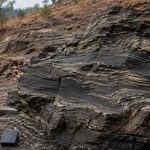




Scientists studying layered rock in eastern India say they may have identified evidence of microbial life dating back roughly 3.5 billion years. If confirmed, the findings could offer an important new window into when and how life emerged during Earth’s earliest geological history.
The study, published in the Proceedings of the National Academy of Sciences, describes potential biological signatures preserved in carbon-rich chert, a hard sedimentary rock composed largely of silica.
Scientists Search for Evidence of Earth’s Earliest Life
Earth formed approximately 4.5 billion years ago, but scientists continue to debate exactly when the planet first became capable of supporting life.
Ancient rocks can preserve chemical and structural clues from early organisms. However, interpreting those clues is difficult because many of Earth’s oldest surviving rocks have been exposed to extreme heat, pressure, deformation and chemical alteration over billions of years.
Previous geological research in Greenland, South Africa and Western Australia has suggested that life existed at least 3.4 billion to 3.8 billion years ago. Some of that evidence remains disputed because geological processes may have altered the rocks and produced features resembling biological material.
Carbon Isotopes Can Indicate Biological Activity
One clue researchers use is the relative abundance of carbon isotopes. Carbon containing a higher proportion of carbon-12 and less of the heavier carbon-13 isotope is commonly associated with biological carbon-fixing processes.
Possible traces of early microorganisms have previously been identified in ancient marine and hydrothermal settings. These signs may include residual carbonaceous matter, biominerals, microbial mats and layered structures formed by microscopic organisms.
Microbial mats are complex, multilayered communities made primarily of bacteria and archaea. When preserved in rock, their structures and chemical composition may provide evidence of early life.
The study’s authors cautioned that identifying such material requires careful analysis.
“Preservation of Paleoarchean microbial mats is rare due to subsequent deformation and metamorphism. Thus, careful identification is required as abiotic processes may generate ‘biomarker-like’ signatures,” the researchers wrote.
Layered Chert Found in Eastern India
The research team mapped and collected samples from a folded, carbon-rich chert layer in the Singhbhum Craton, an ancient geological region in eastern India.
The rock contained thin, repeating layers of silica and carbonaceous material. According to the researchers, this pattern resembles the remains of an ancient microbial mat.
Zircon crystals embedded in the rock were analyzed through uranium-lead dating, a widely used method for determining the age of ancient geological material. The results placed the rock’s age at approximately 3.497 billion years.
Researchers interpreted that date as the approximate time when the sediment was deposited. They said the sediment accumulated during a period of volcanic activity, which also produced the zircon crystals found in the formation.
Chemical Testing Supports a Possible Biological Origin
The team used carbon-isotope analysis and Raman spectroscopy to determine whether the carbon was part of the original rock or introduced through later geological changes.
Researchers reported that the carbon-isotope ratios were consistent with material produced through biological processes. Raman spectroscopy also showed that much of the carbon remained in the form of relatively poorly ordered kerogen.
Kerogen is a solid, wax-like mixture of organic chemical compounds commonly found in sedimentary rocks. Its condition can help scientists evaluate how much heat and geological alteration the material has experienced.
“The chert exhibits micron-scale alternating layers of carbonaceous and siliceous materials. δ13C isotope data of carbonaceous matter (CM), together with stratigraphic relationships, indicate a biogenic origin of the kerogen, marking this, to our knowledge, as the oldest directly dated rock with a confirmed biosignature,” the study authors wrote.
Findings Require Independent Confirmation
Although the results point to a possible biological origin, additional research will be needed to establish whether the chert represents the oldest directly dated rock containing a confirmed biosignature.
Independent researchers could examine whether the zircon crystals accurately date the deposition of the chert and test alternative explanations for the layered carbonaceous material.
Scientists may also study nearby rock layers for microscopic structures, additional chemical evidence or other minerals that can be dated directly.
If further analysis supports the researchers’ interpretation, the Singhbhum Craton discovery could strengthen evidence that microbial communities were already established on Earth nearly 3.5 billion years ago.

Cohen is a contributor at Houstonian Online, covering a variety of topics including news, politics, business, technology, sports, entertainment, and lifestyle. With a focus on clear reporting and useful information, Cohen helps readers stay informed about current affairs, emerging trends, and stories that are relevant to their daily lives.