







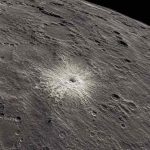


NASA has released new images showing a crater created when a discarded SpaceX rocket stage struck the moon in an uncontrolled impact earlier this month. The collision added a fresh mark to a lunar surface already covered with craters formed over billions of years.
Falcon 9 Rocket Stage Strikes the Moon
The defunct upper stage of a SpaceX Falcon 9 rocket crashed into the moon on Aug. 5 at an estimated speed of 5,400 mph, according to trajectory calculations.
The rocket stage weighed roughly 10,800 pounds and had been used to launch two lunar landers in January 2025. After completing that mission, the hardware remained adrift in space until its path eventually carried it into the moon.
No spacecraft or ground-based telescope captured live images of the collision. However, researchers tracked the object’s trajectory closely enough to estimate where it would strike.
Their calculations placed the impact site near the western edge of the moon’s sunlit side.
Lunar Reconnaissance Orbiter Photographs Crash Site
NASA’s Lunar Reconnaissance Orbiter photographed the expected impact area on Aug. 11 and 12, several days after the crash. The space agency released the images Tuesday.
Before-and-after views of the location reveal a bright, newly formed divot among the moon’s older impact features. Fresh lunar craters can appear brighter because collisions expose material beneath the surface that has not yet been darkened by long-term exposure to space weather.
Orbiter Needed Time to Reach the Location
Capturing the crash site was not as simple as immediately directing a camera toward the area. The Lunar Reconnaissance Orbiter travels around the moon from pole to pole approximately once every two hours.
At the same time, the moon continues rotating on its axis. As a result, the spacecraft must wait for its orbital path to align with a particular location before it can collect detailed photographs.
The orbiter’s images allowed researchers to compare the terrain with photographs taken before the Aug. 5 collision and confirm the appearance of a new crater in the predicted area.
Rocket Debris Highlights the Growth of Lunar Activity
Discarded rocket stages can remain in space for extended periods after completing their primary missions. Their eventual paths depend on several factors, including gravity from Earth, the moon and the sun.
The Falcon 9 impact also underscores the importance of tracking inactive spacecraft and launch hardware as governments and private companies increase their activity around the moon. Accurate monitoring helps researchers predict collisions and distinguish human-made impact sites from natural craters caused by asteroids and other objects.
NASA’s newly released photographs provide a clear record of the event, confirming that the abandoned rocket stage left a visible scar on the lunar surface. The images will also give scientists another opportunity to study how high-speed impacts alter the moon’s terrain.

Cohen is a contributor at Houstonian Online, covering a variety of topics including news, politics, business, technology, sports, entertainment, and lifestyle. With a focus on clear reporting and useful information, Cohen helps readers stay informed about current affairs, emerging trends, and stories that are relevant to their daily lives.